
A Smarter Alternative to Static Manufacturing Dashboards
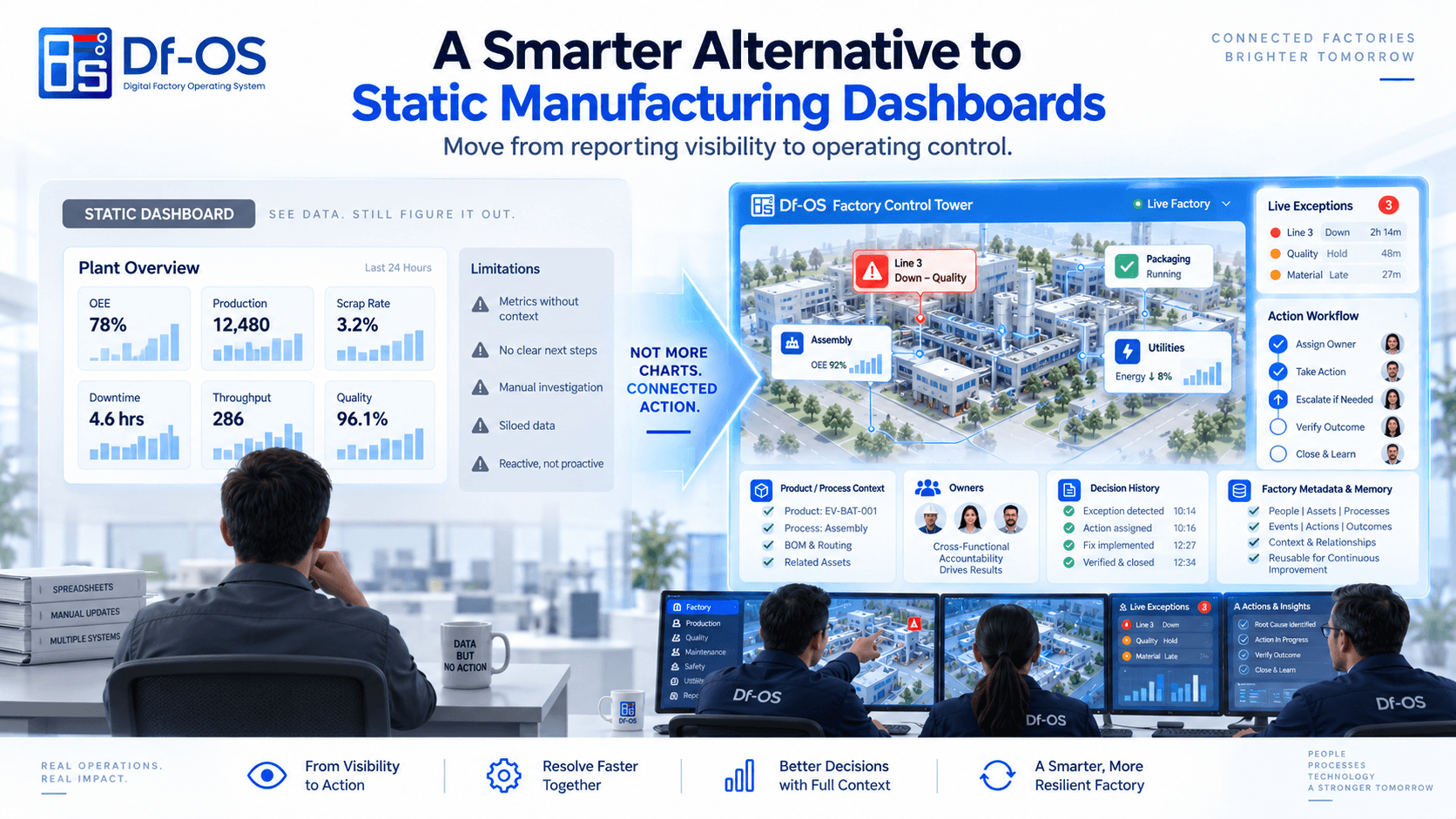
A smarter alternative to a static manufacturing dashboard is a connected Factory Control Tower built on a factory operating system. It links metrics to live exceptions, product and process context, action owners, escalation, decision history and verified closure.
Manufacturing dashboards solved an important problem. They made factory information visible.
The next problem is action.
A plant can have a clean dashboard and still depend on calls, messages, spreadsheets and meetings to decide what should happen next. The screen shows a red metric. The operating process remains manual.
A smarter alternative is a connected Factory Control Tower built on a factory operating system.
What a static dashboard does well
A dashboard can:
- Consolidate metrics
- Show trends
- Compare lines and shifts
- Highlight thresholds
- Reduce manual report preparation
- Provide management visibility
These capabilities remain valuable.
The limitation is that many dashboards stop at display.
What a dashboard may not show
A red downtime metric may not show:
- The active machine event
- The product and process context
- The operator observation
- The responsible technician
- The escalation status
- The current corrective action
- Similar prior failures
- Whether the action worked
The user sees the symptom but must leave the dashboard to operate the response.
Dashboard versus connected operating environment
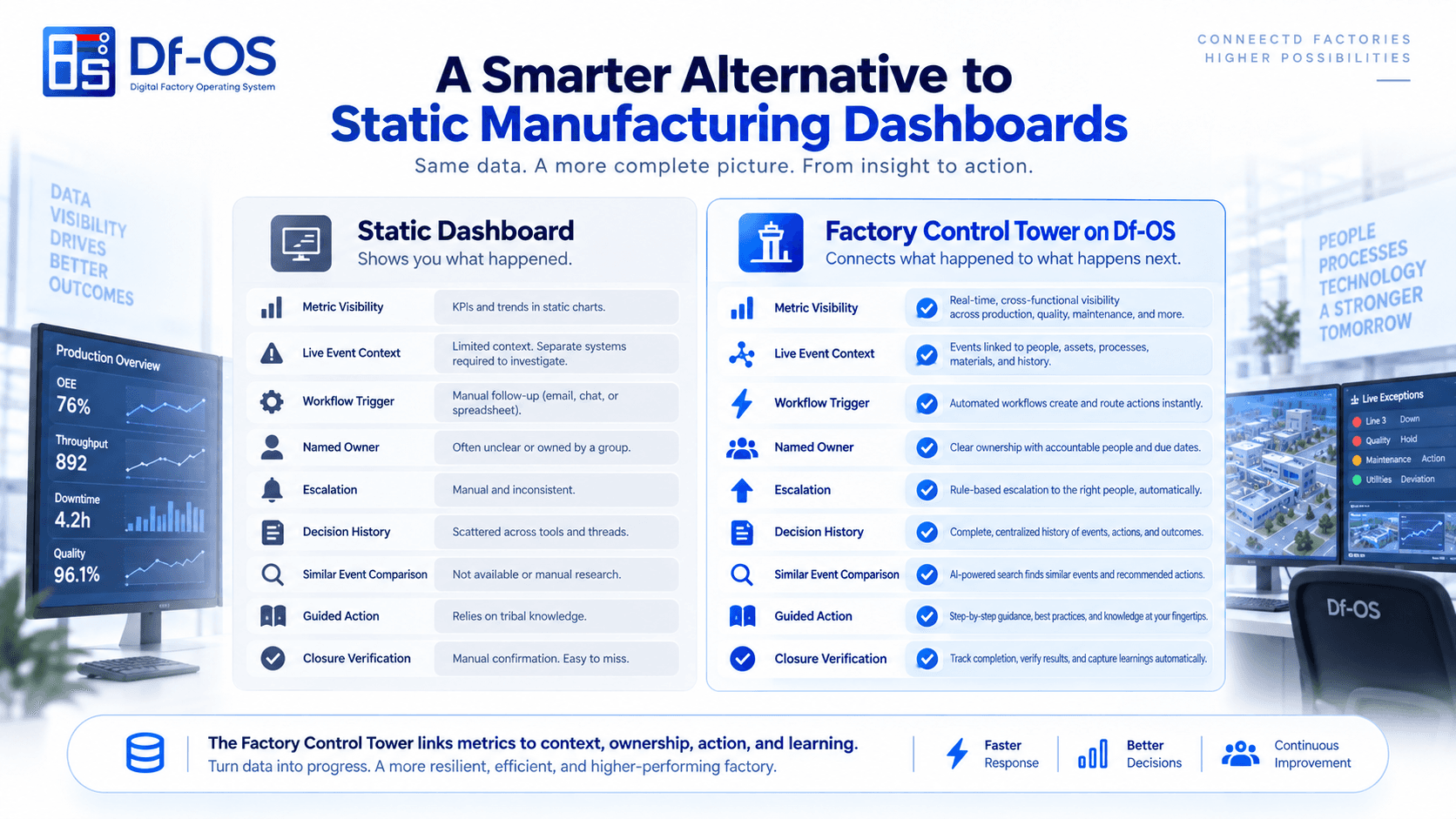
Capability | Static dashboard | Factory Control Tower on Df-OS
- Metric visibility: Yes — Yes
- Live event context: Limited — Connected to factory events
- Workflow trigger: Limited — Built into the operating model
- Named owner: Often outside the screen — Visible with task and due time
- Escalation: Usually manual — Event driven and traceable
- Decision history: Limited — Preserved in Factory Metadata & Memory
- Similar event comparison: Requires separate analysis — Available through connected history
- Guided action: Rare — Supported through Vish AI and workflows
- Closure verification: Often external — Part of the operating loop
The shift from reporting to operating
A connected operating environment follows a different sequence.
- 1. The event is detected
- 2. The condition gains product, process and shift context
- 3. The responsible workflow begins
- 4. The Control Tower shows impact and ownership
- 5. The action is recorded
- 6. The result is verified
- 7. The history becomes Factory Metadata & Memory
The screen is not the system. It is the view into the system.
Why more charts can make the problem worse
When leaders ask for more visibility, teams often add more metrics.
This can create:
- Crowded screens
- Competing definitions
- Alert fatigue
- More analysis without more action
- Different dashboards for each function
The better question is which decision the user needs to make.
A role based view should show the minimum context required for that decision.
A practical example
A plant dashboard shows that quality rejection increased during the night shift.
A connected Control Tower allows the quality head to open the deviation, view the product and material lot, compare process conditions, see the containment status, identify the owner and review similar past events.
Vish AI can summarise the relevant history. The quality team approves the next action.
The metric becomes a working decision path.
The role of Factory Metadata & Memory
Factory Metadata & Memory connects the current condition with the events and actions behind it.
This provides:
- Context
- Traceability
- Repeat pattern analysis
- Corrective action history
- Decision continuity across shifts
- A foundation for reliable recommendations
Without this layer, the dashboard must reconstruct meaning from disconnected data each time.
The connection to the Autonomous Factory
Autonomous operations require a closed loop.
A static dashboard provides visibility, but it does not complete the loop. A factory operating system connects sensing, understanding, action and verification.
Selected loops can then progress from manual response to guided action and bounded autonomous execution.
How to assess the current dashboard
Ask:
- Can the user move from a metric to the event?
- Can the user see product, process and shift context?
- Does the exception create a task?
- Is the owner visible?
- Is escalation automatic?
- Can the result be verified?
- Is similar history available?
- Can the system explain the condition using traceable records?
If most answers are no, the plant has reporting visibility rather than operating control.
The Df-OS model
Df-OS digitises factory workflows and connects events across functions. X-Konnect brings machine signals into the operating layer. The Factory Control Tower provides live, role based visibility. Factory Metadata & Memory preserves the history. Vish AI supports explanation and guided decisions.
Final perspective
Dashboards remain useful, but the factory should expect more from its digital environment.
The next stage is not a bigger dashboard. It is a connected operating system that links every important condition to context, ownership, action and learning.
Ready to Modernize Your Factory Operating Layer?
Discover how Df-OS digitizes shopfloor workflows, connects brownfield machines, and creates Factory Metadata & Memory without rip-and-replace disruption.
Frequently Asked Questions
No. Existing dashboards can remain where they serve a clear reporting role. The priority is to connect critical exceptions to the operating workflow.
Stay Ahead of Manufacturing AI
Join 15,000+ plant managers and industrial leaders receiving our bi-weekly reports on AI agents, shopfloor data operations, and the future of smart factories.
Df-OS Editorial Board
Industry experts mapping the future of connected digital factory operating systems and manufacturing intelligence.
Related Insights & Guides
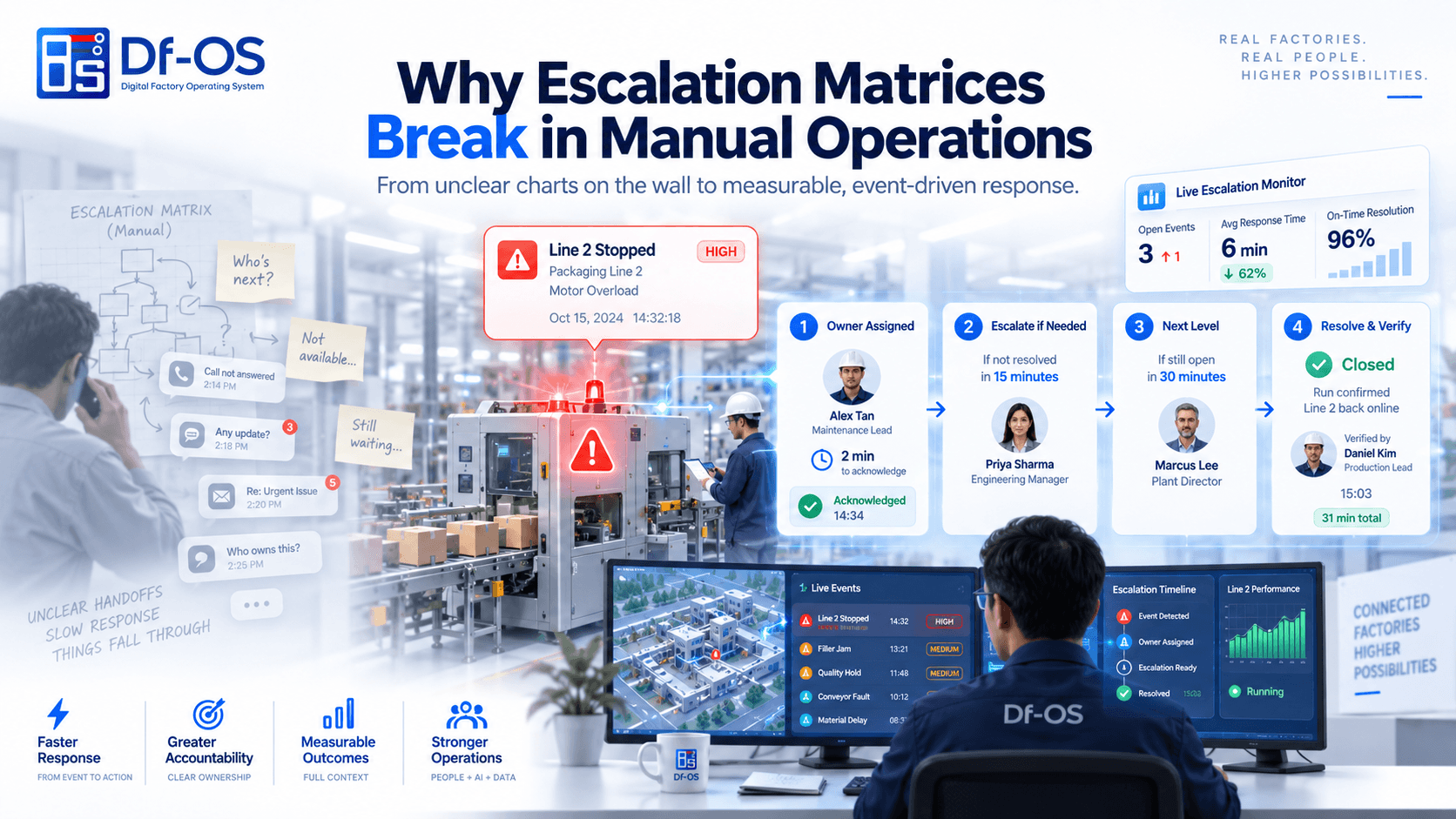
Why Escalation Matrices Break in Manual Operations
Why manual factory escalation matrices fail and how event-driven workflows connect measurable triggers, ownership, response time, escalation, closure evidence and learning.
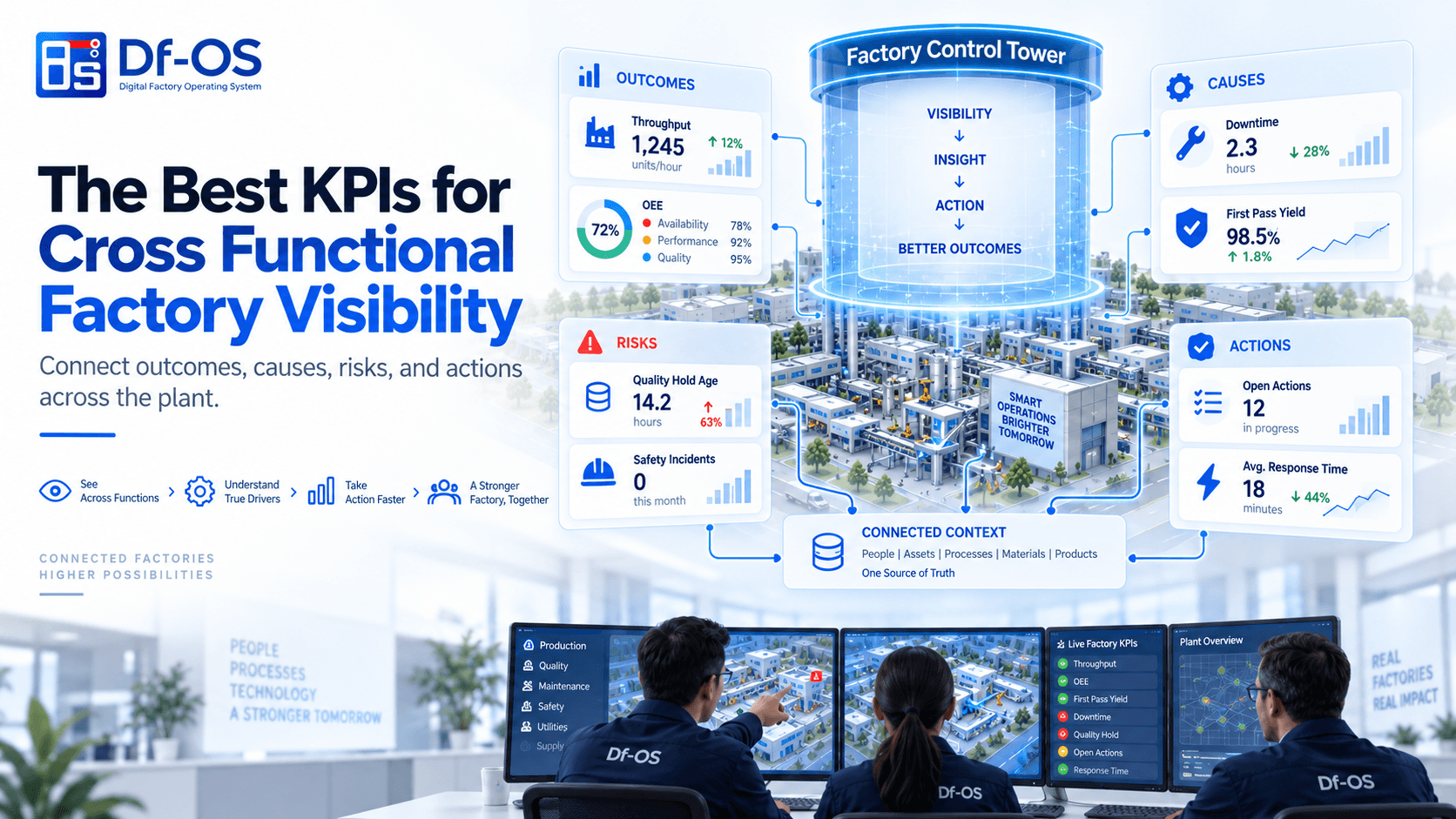
The Best KPIs for Cross Functional Factory Visibility
A four-level KPI framework connecting plant outcomes, operating causes, forward risks and action closure across production, quality, maintenance, safety and utilities.
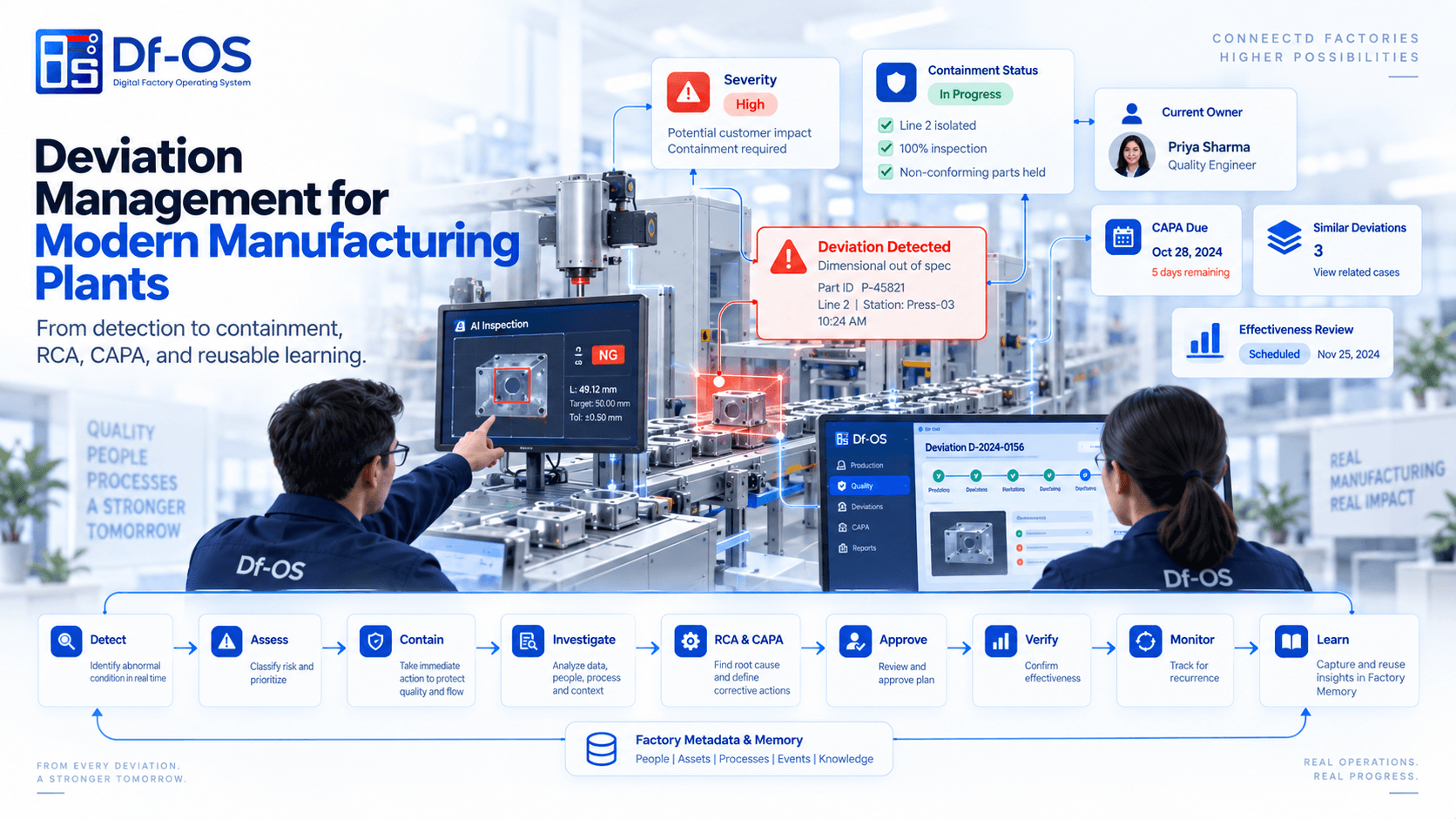
Deviation Management for Modern Manufacturing Plants
A connected manufacturing deviation lifecycle from detection and containment through RCA, CAPA, effectiveness review, recurrence monitoring and reusable operating memory.