
What the 2026 World Economic Forum Lighthouse Research Reveals About Manufacturing Autonomy
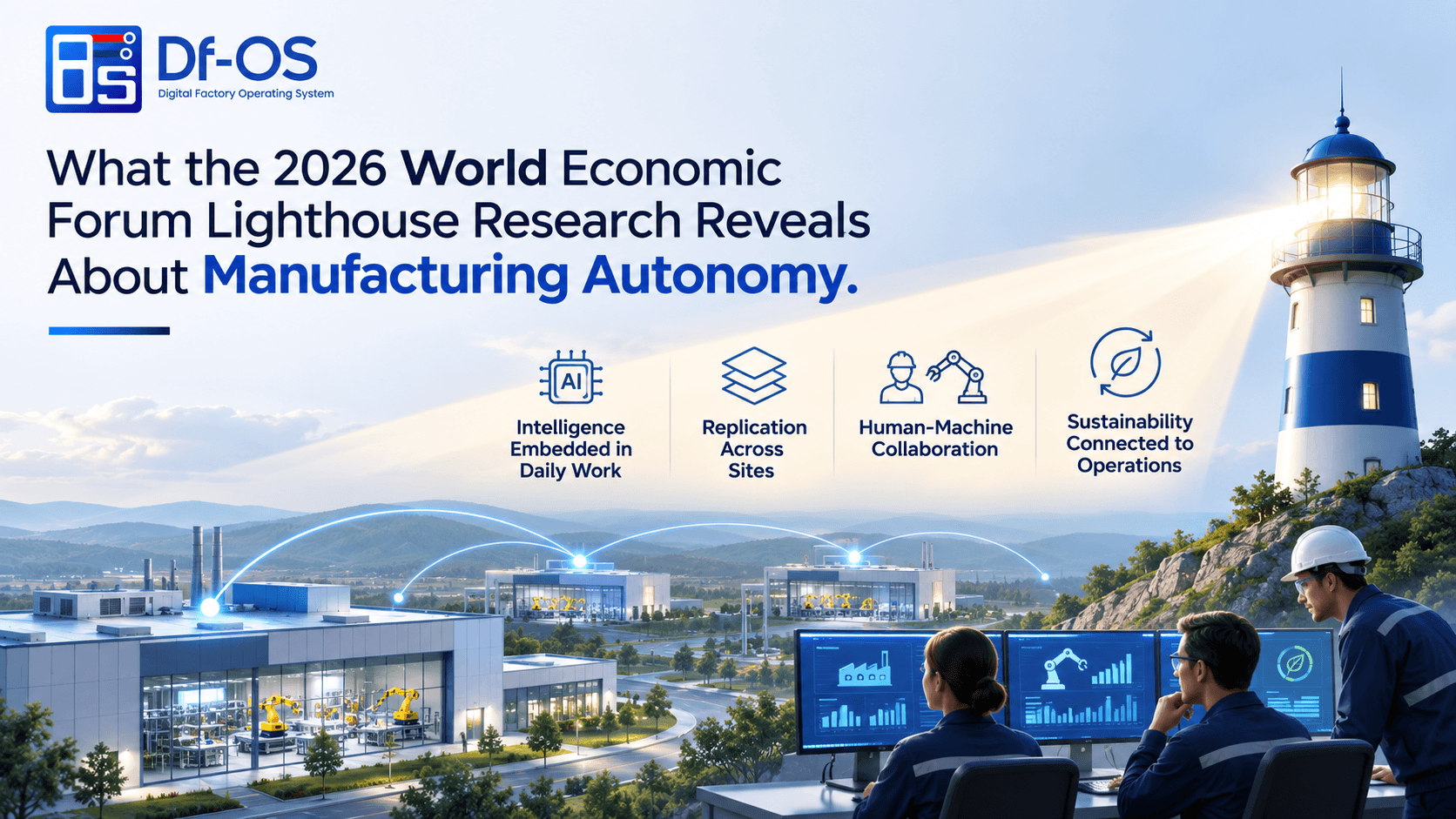
The 2026 World Economic Forum Lighthouse research suggests that manufacturing autonomy depends less on isolated technology pilots and more on intelligence embedded in daily operations, repeatable operating models, human capability and scalable governance. Lighthouse evidence should be treated as examples from advanced sites, not as a global adoption rate for autonomous manufacturing.
The most advanced factories are offering a useful correction to the manufacturing technology debate. Progress does not come from collecting isolated pilots. It comes from changing how operating teams use information, how decisions are made and how improvements are carried from one process or plant to another. The World Economic Forum's 2026 Lighthouse research gives manufacturers concrete evidence of that shift.
In June 2026, the Global Lighthouse Network expanded to 238 recognised industrial sites. The World Economic Forum highlighted three recurring themes: intelligence embedded across operations, closer collaboration between people and machines, and sustainability integrated into performance management. These findings matter to manufacturers pursuing the Autonomous Factory because they point to operating capability rather than technology installation as the source of lasting advantage.
What the 2026 evidence actually says
The World Economic Forum reported 238 recognised sites in its June 2026 update. In a July overview, it said analytical AI and machine learning featured in approximately 62% of Lighthouse solutions in 2025, while generative AI accounted for 23% under its updated classification methodology. The numbers describe use cases within the Lighthouse network, not the share of all global factories that have adopted AI.
The Forum's January 2026 report, Global Lighthouse Network: Rewiring Operations for Resilience and Impact at Scale, examined a community of 223 sites at that point in the year. Its priorities included operational resilience, broader use of AI and replication from pilots to enterprise systems. The different totals reflect reports published at different dates, not contradictory measurements.
A separate September 2026 World Economic Forum perspective addressed replication directly. It noted that only 23 Lighthouse organisations had extended their operational transformation to three or more sites within the dataset it discussed. That observation is a reminder that a successful flagship factory and a scaled enterprise operating model are different achievements.
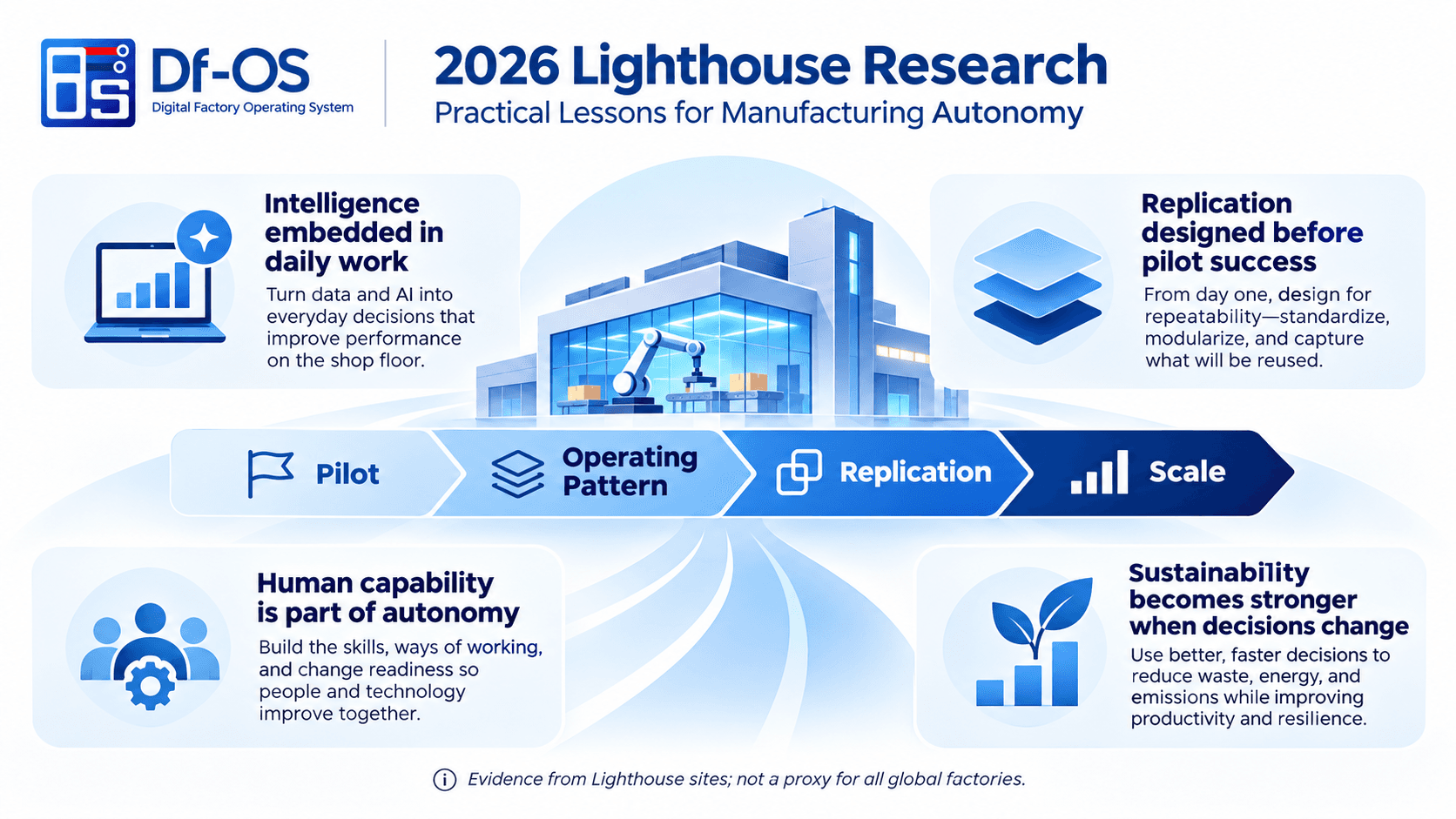
Lesson 1: Intelligence has to be built into daily work
An algorithm may accurately predict a defect or equipment issue. The factory still needs a process to act on the prediction. Who receives it? Which evidence is required? Can the line continue? Who approves the response? How is the outcome measured?
The Lighthouse message is that advanced technologies are becoming part of normal production and management processes. For a plant leader, the practical implication is to pair every intelligence use case with a defined operating owner, workflow and business measure.
A quality prediction connected to a hold, inspection, disposition and release workflow has a clearer route to value than a prediction displayed on a separate dashboard.
Lesson 2: Replication must be designed before the pilot succeeds
Plants often differ in equipment suppliers, local practices, products, workforce skills and source systems. A pilot configured around one site can become expensive to replicate if every rule, identifier and integration must be rebuilt.
The solution is neither rigid standardisation nor unrestricted local customisation. Enterprises need a shared foundation of definitions, governance, workflow patterns and outcome measures, while allowing controlled differences in local process logic.
This is relevant to Factory Metadata & Memory. Common event classifications and decision records make it easier to compare lessons across plants. Without that context, the second site may repeat the first site's learning curve.
Lesson 3: Human capability is part of industrial autonomy
The World Economic Forum's 2026 themes place workforce transformation alongside AI adoption. That is a practical point, not a public relations message.
A technician needs to understand why a recommendation was made. A quality leader needs evidence before accepting a proposed disposition. Operators need clear instructions and a straightforward way to report that the system has misunderstood a situation. Plant leaders need escalation rights and visibility into failures.
An Autonomous Factory should reduce avoidable coordination work and improve the quality of human decisions. It should not depend on people blindly trusting an unverified recommendation.
Lesson 4: Sustainability becomes stronger when operational decisions change
A monthly energy report has value for accountability. An abnormal compressed air pattern identified early enough for a maintenance response can influence consumption directly. The difference is whether resource information is connected to plant operations and ownership.
The Lighthouse agenda increasingly treats resource productivity as part of operating competitiveness. Manufacturers should therefore connect sustainability data to lines, production volumes, utilities, maintenance tasks and verified interventions. This also creates stronger evidence for ESG reporting.
A practical Lighthouse translation for ordinary plants
Most manufacturers will not have the capital budget or engineering resources of a globally recognised Lighthouse site. They can still use the same decision logic.
Lighthouse principle | Practical plant application
- Integrated intelligence: Connect one high-value event to an approved workflow
- Repeatable operations: Standardise event definitions and action ownership
- Human collaboration: Train supervisors to evaluate and override recommendations
- Replication: Document the workflow, integration and result for reuse
- Sustainability: Link resource anomalies to corrective action and verification
The appropriate starting point could be downtime escalation on one line, a quality genealogy programme, a multi-plant ESG data process or daily exception management.
What this means for Df-OS and the Autonomous Factory
Df-OS positions itself as the AI-native Digital Factory Operating System. X-Konnect connects suitable machine signals. Factory Metadata & Memory preserves context and decisions. Vish AI supports explanation and guided action. TraceMaster contributes product and material genealogy, while Df-OS ESG structures plant-level sustainability evidence.
These capabilities are relevant because they address the operating foundations that must exist before greater autonomy is safe and repeatable. They are not evidence that every Df-OS deployment has achieved autonomous execution. Results depend on use case, integration, governance and adoption.
The main lesson from the 2026 Lighthouse research is straightforward. Build an operating capability that can be measured and reproduced. Autonomy will become more credible as that capability matures.
Test Whether One Successful Use Case Is Ready to Scale
Evaluate whether another plant could adopt your best digital workflow using shared data definitions, workflow logic, and verified outcome metrics.
Frequently Asked Questions
No. It is a selected network of advanced industrial sites, not a representative sample of all manufacturers. The research provides examples and practices, not a global autonomy adoption rate.
Stay Ahead of Manufacturing AI
Join 15,000+ plant managers and industrial leaders receiving our bi-weekly reports on AI agents, shopfloor data operations, and the future of smart factories.
Df-OS Editorial Board
Industry experts mapping the future of connected digital factory operating systems and manufacturing intelligence.
Related Insights & Guides
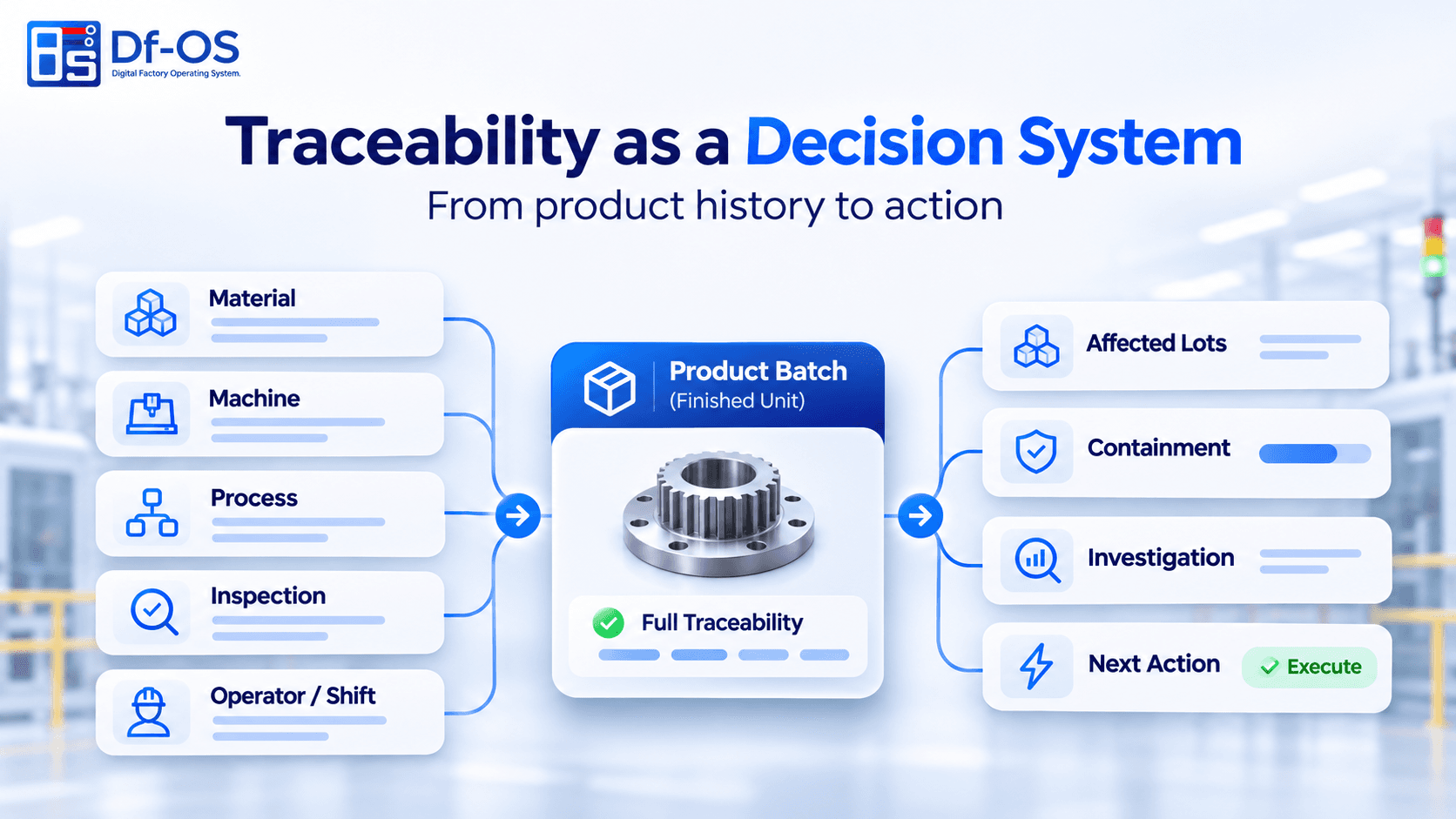
Traceability as a Decision System: How TraceMaster Connects Product History to Action
Traceability becomes operationally valuable when product, material, process, inspection and movement history can support faster containment and investigation decisions.
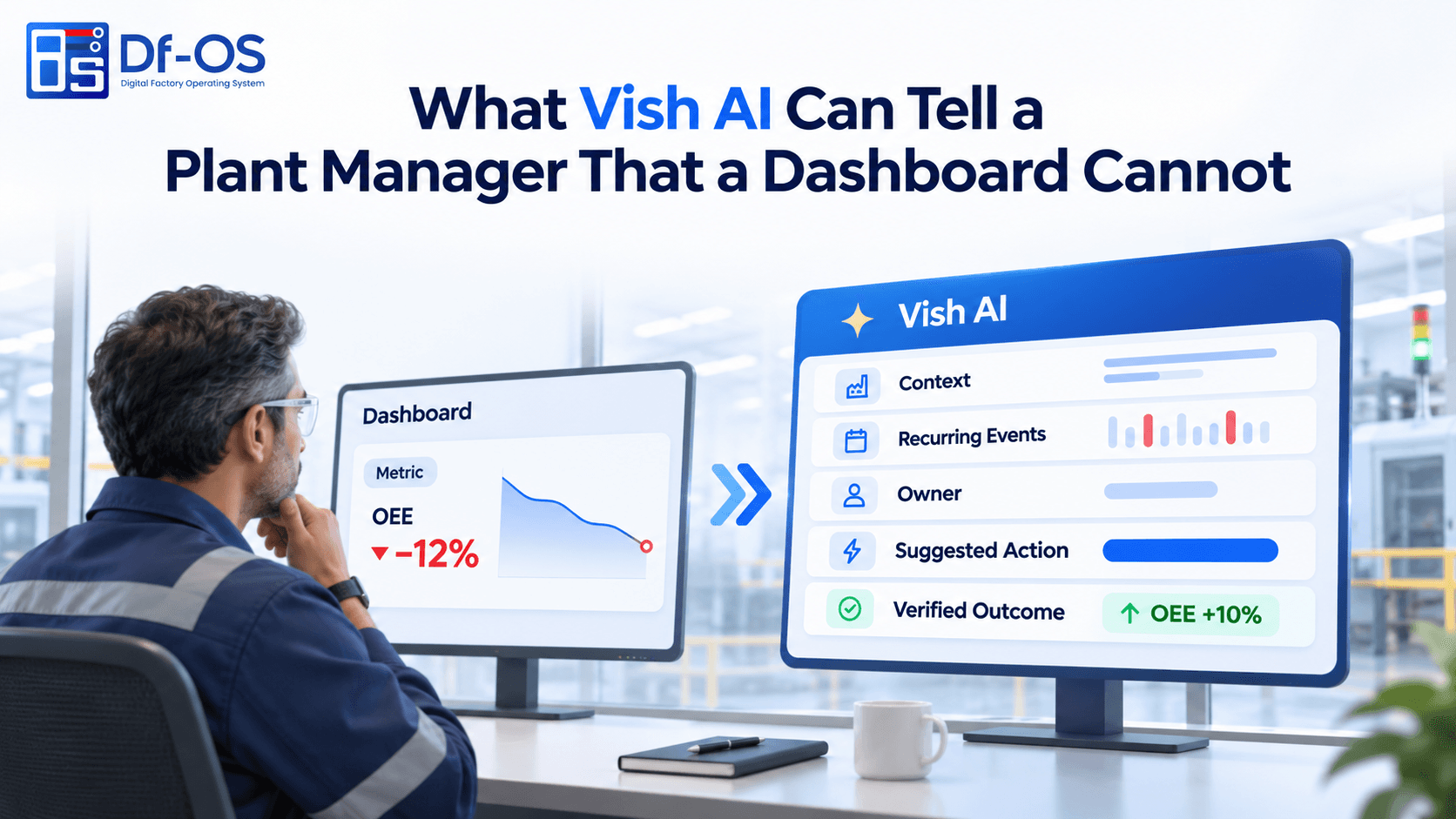
What Vish AI Can Tell a Plant Manager That a Dashboard Cannot
A plant-manager view of factory intelligence: what Vish AI can help explain beyond dashboards, how answers should remain traceable, and where human authority is required.
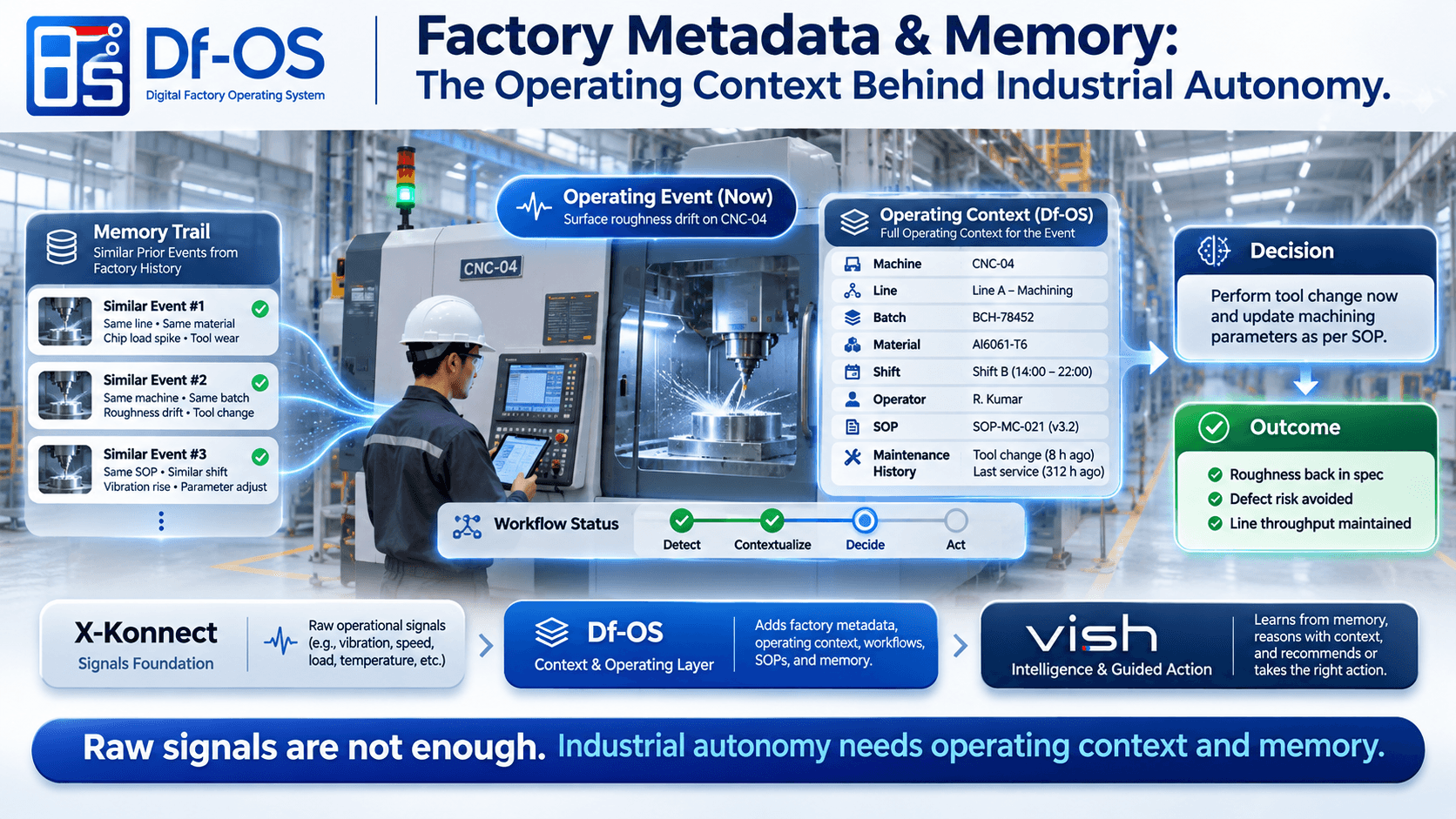
Factory Metadata & Memory: The Operating Context Behind Industrial Autonomy
Why industrial autonomy needs more than machine signals: Factory Metadata & Memory connects events to identities, conditions, workflows, decisions and verified outcomes.